Archive | Travel

Getting Ready For Your Summer Vacation

Posted on 24 March 2010 by stormwild

EASY MONEY>WORKSHEET

Getting Ready For Your Summer Vacation

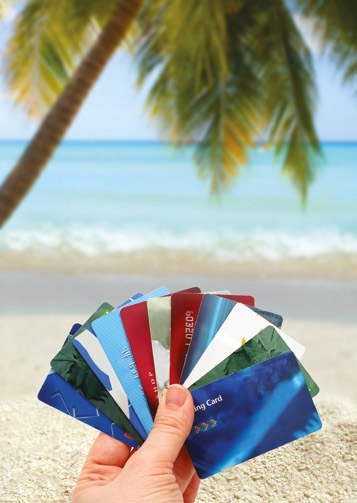
It’s time for fun in the sun. But before you pack your bags, set your budget so your great vacation won’t turn into a bad trip

Step 1: Determine how much you can afford. There are three ways you can pay for your vacation – with your savings, using your credit card, or a combination of both. Regardless of how you fund your trip, set a realistic budget, because that will determine your destination, length of stay, and activities.

Step 2: List down all possible expenses. Make four major categories – transportation, accommodations, food, entertainment, and miscellaneous. Make sure to include little things like airport tax, tips, tickets, etc.

Step 3: Estimate the cost per item. It’s easy to find out the cost of most expenses, like airfare, hotel room, tours, and admission tickets. Just check the Web sites of the airline, hotel, amusement parks, tourist attractions, tour operators, and the like. You can also get the typical cost of fares, tips, meals, Internet access, etc. from travel books and sites. As for the rest, just plug in a reasonable estimate.

Step 4: Compute the number of passengers and days. If you’re traveling as a family, you obviously have to multiply many of these expenses by how many you are, including fares, meals, tickets, and tours. For certain items, like food and accommodations, you also need to multiply by the number of days you’ll be on vacation.

Step 5:  Make the necessary adjustments. After summing up your initial estimates, you may find yourself over budget. This is when you should make adjustments. Since accommodations take up a third of your total cost, a good way to work within your budget is to cut down your length of your stay or choose a cheaper alternative. You can also lower your expenses further by choosing a different date and time for your departure and arrival. You would also have to shortlist the places you want to see and scale back on expenses you can live without. But don’t cut your budget to the bone; leave some buffer for the unexpected.

Expense Item Cost Per Pax No. of Pax Cost Per Day Amount
Transportation
Airfare
Checked baggage fees
Airport tax
Airport transfers
Taxi, bus, and ferry fares
Subway and rail tickets
Travel insurance
Accommodations
Hotel room
Tips
Food
Meals
Snacks and drinks
Entertainment
Tours
Admission fees
Nightlife and entertainment
Sports and recreation
Miscellaneous
Shopping
Souvenirs
Phone and Internet
Medicines
Personal care
Others
Total

Comments (1)

Bite the Big Apple: New York City on a Budget

Posted on 24 February 2010 by stormwild

SMART SPENDER>THE GOOD LIFE

Bite the Big Apple

New York City on a Budget

Text and Photos By Heinz Bulos

New York City is one of the priciest cities in the world, but you don’t have to spend a lot of dough in the Big Apple. There are plenty of cheap – and free – options for you.

Where to Stay

If you think you won’t find affordable rooms in New York under $100, think again. Hotel rates in the Big Apple are the most expensive in the US. Still you can find cheap hotel rooms. Prices of course vary per season; you’ll get the lowest rates during winter (January to March), and stay on weekends, which are often cheaper. It’s also best to check out downtown hotels, which are outside the touristy spots (but also happen to be located in more interesting and authentic neighborhoods.

Start with boutique hotels, small establishments with a few rooms but with great character. The Chelsea Savoy Hotel (www.chelseasavoynyc.com), close to the subway and the night life, offers rooms with a private bath and complimentary breakfast starting at $99. A popular boutique hotel is The Gershwin (www.gershwinhotel.com) in Murray Hill, which has a funky vibe to it. Most rooms have private baths that start at $109 but the cheaper dorm-like rooms start as low as $45. If you’re not too picky with sharing a bathroom with other guests, the Larchmont Hotel (www.larchmonthotel.com) in Greenwich Village offers great value at $90 up.

Another good option is to stay at motels. They’re not the kind you’ll find here in the Philippines. Motel chains offer decent rooms at good prices. Apple Core Hotels (www.applecorehotels.com) operate five hotels in Manhattan that offer excellent value, including Red Roof Inn, Comfort Inn, La Quinta, Ramada Inn, and The Hotel. Prices start at $89. A sister chain, Super 8, has a fantastic location in Midtown Manhattan, and offers similar features and prices as Red Roof Inn.

There are other alternatives like hostels, rental apartments, and inns, both in Manhattan and the other boroughs of New York City (particularly Brooklyn, Queens, and The Bronx), which are just a subway train or bus ride away.  The cheapest place to stay, of course, is at your friend’s or relative’s house or apartment. Being Filipino, it’s highly likely you have a cousin or college buddy living in the Big Apple.

I’ve stayed at a clean and cheap Super 8 motel in New Jersey, which was just a 15-minute bus ride to Midtown Manhattan, a swanky apartment at the Upper West Side owned by a friend of a friend, and at my uncle’s apartment in Queens, a short subway ride from Manhattan.

How to Get Around

Once you get settled in your accommodations, the next order of the day is to explore New York City. On your first morning, take a bus tour like the iconic Gray Line New York Sightseeing (www.coachusa.com/newyorksightseeing/), which is without a doubt the best there is. Yes, you’d look like a typical tourist on the double-decker bus, heckled by the occasional rude New York local, but the hop-on-hop-off tour will give you a comprehensive view of Manhattan – and, depending on the package, other boroughs – in a day or two. It saves you the time and effort of visiting popular landmarks by subway or foot. Get the $49 All Loops Tour, which is valid for 48 hours and includes 50 stops. There are four loops of 2-3 hours each, although you can just take the Downtown and Uptown Loops and skip the Night Tour and Brooklyn Loop if you’re pressed for time. Just hop off a neighborhood you want to explore further on foot and then catch the next bus when you’re done. There are other types of tours you can consider like bike tours, boat tours, and helicopter tours, but they’re either more expensive or inconvenient, but they do give a unique perspective of the city.

Once you’ve taken the bus tour, it’s time to try the two other popular modes of transportation – the subway and taxis. The MTA New York City Subway is certainly the fastest and cheapest way to go around New York City. One trip costs $2. Get the Fun Pass for unlimited rides for the day for only $7.50. Of course, a trip to the Big Apple wouldn’t be complete without taking one of the city’s 10,000 yellow cabs. It starts at $2.50 and then 40 cents for each fifth mile traveled (there are extra fees for idle time, peak, and night surcharges). You also pay 30 cents for every half-minute waiting in traffic, and 50 cents extra at night. Conventional tips are in the 15 percent range. But keep your taxi rides to a minimum, because the cost can add up.

If you like more intimate and unique guided tours, try taking a walking tour. Whether you want to explore a particular neighborhood or want a theme based on your interest – movies, food, shopping, architecture, literature, history, finance, etc. – there’s a walking tour available. Prices range from free to $180. Or contact Big Apple Greeters (www.bigapplegreeter.org), which offers a free personalized 2- to 4-hour tour of New York City for a family or small group.

The great thing about Manhattan is that it’s truly a “walkable” city. It’s best experienced on foot. It’s nice to get interesting facts and insider tips from walking guides, but if you research way ahead of your trip, you can get a lot of satisfaction – and surprises – if you explore on your own.

The best places to walk around are located in Downtown Manhattan (www.downtownny.com) such as South Street Seaport, the Financial District, Tribeca, Chinatown, Little Italy, Soho, East Village, and Greenwich Village. There are even street signs located at famous landmarks that give a brief background and even suggestions on where to go next. And since you’d likely be visiting the most crowded tourist spots of Times Square and the Theater District, you might as well explore other Midtown areas such as Chelsea, the Meat-Packing District, Flatiron District, Union Square, Gramercy Park, Murray Hill, and the Garment District. I’ve explored all these neighborhoods on foot with nothing more than a map and a list of landmarks I wanted to see and restaurants I wanted to try, and limped all the way from Midtown to Chinatown via the entire stretch of Fifth Avenue. The best thing is it didn’t cost me a cent.

Where to Eat

Manhattan is world-renowned for chic bars and expensive restaurants. You can skip those. One of the best ways to experience New York – as with any other big city – is to try the street food. Thankfully, NYC street food is nothing exotic or stomach-churning, although they’re not completely stale-and-dirty-free. Most street vendors serve up cheap, tasty, and filling hotdogs, barbecue, pretzels, shish kebab, and falafel. You’ll find a cart at practically every street corner.

You can get good eats at under $5. The city is well known for its coal- and brick-over pizza parlors. So you can get a good, quick, and affordable meal if you buy a pizza slice or two (they’re huge) from the likes of Patsy’s Pizzeria (www.patsyspizzeriany.com) in East Harlem where a slice costs just $1.50 or Famous Joe’s (www.famousjoespizza.com), where it’s $2.25 per slice. I tried the world-famous and historic Lombardi’s (www.firstpizza.com) in Little Italy, ordering a whole 14-inch pie for $20 (they don’t sell slices, and I didn’t mind). Or get a bagel, another famous New York staple, for around 75 cents, which is great for breakfast along with coffee. Sandwiches are pretty affordable too, and the most popular deli has to be Katz’s Delicatessen, made even more famous in the film When Harry Met Sally. Try the renowned and overstuffed corned beef sandwich for $10.50 or just a hotdog for $2.50. Speaking of hotdogs, you’ll find the ubiquitous Sabrett (www.sabrett.com) in street corners for a cheap lunch of a frankfurter and a soda. Sure it tastes the same as the ones in Manila, but there’s nothing like eating Sabrett hotdog in Manhattan.

The other must-eat in New York is steak. There are plenty of high-end steak houses in NYC but if you want really cheap but really greasy-good steak, try Tad’s Steaks, a fast-food steak chain with locations in Times Square. Food critics hate it but there’s always a long line. I got the lunch special for just $6.99, which comes with a thin but juicy steak, baked potato, garlic bread, and lots of onions and gravy.

Every big city has its own Chinatown, and New York’s Chinatown is teeming with cheap Chinese restaurants such as Dumpling House where you can order steaming noodles and fried dumplings for less than $3.

What to See

Manhattan is a picture-perfect city, with turn-of-the-century architectural wonders and modern movie scenery (yes, NYC is possibly the most filmed city ever). And you can visit most of these must-see tourist sites for free.

You can spend the whole day if you explore Central Park, an oasis amidst busy New York streets. But it’s worth the time. And make sure you go inside the majestic Grand Central Station (New Yorkers prefer to call it Grand Central Terminal) and just bring in the sights and sounds. Most likely, you’ll find yourself gawking in glitzy Times Square, which you have to experience during both day and night time.

Visit famous skyscrapers and churches such as Rockefeller Center, Chrysler Building, Flatiron Building, New York Public Library, Federal Reserve Bank of New York, the United Nations headquarters, Radio City Music Hall, City Hall, New York Stock Exchange, Yankee Stadium, St. Patrick’s Cathedral, and the Cathedral Church of St. John the Divine, among others. And while it costs about $20, you might as well as go up the observation deck of the Empire State Building to get a bird’s eye view of the city.

A nice place to hang out is the historic South Street Seaport (www.southstreetseaport.com). The waterfront is lined up with cafés, shops, restaurants, and sadly a shopping mall, but the renovated mercantile buildings and sailing ships add to its charm, along with wide open spaces, where you can enjoy watching street performers. You can also get a great view of Brooklyn Bridge here.

Another must-see is the Statue of Liberty. A ferry ride to Liberty Island and Ellis Island costs $12, and you can gawk at the Lady Liberty and explore the museum and the old facilities for free. If you have extra time, you can also visit Staten Island and get a nice view of the New York skyline on the free ferry ride.

What to Do

The thing about New York City is you can enjoy it without spending a dime. The Big Apple boasts of parks and museums that are open to everyone without an admission ticket. Visit museums, parks, and gardens that don’t charge visitors like the Forbes Magazine Galleries, National Museum of the American Indian, Goethe Institut, Museum at Fashion Institute of Technology, Sony Wonder Technology Lab, Brooklyn Botanical Garden, New York Botanical Garden, Staten Island Museum, American Folk Art Museum, Bronx Museum of the Arts, and Bryant Park. Keep in mind that some are free only on certain days, so make sure you check their Web sites and other online resources.

Or go to those that let you pay whatever you can afford! These include the Metropolitan Museum of Art, one of the greatest art museums in New York City, which has a “suggested” admission of $20. You can go to the Bronx Zoo and donate whatever you can on Wednesdays. Go to the Guggenheim Museum, Whitney Museum of American Art, or to the famous Museum of Modern Art (MoMA) on Fridays at night and give what you wish.

Of course, a trip to NYC is not complete without watching a show on Broadway. Forget paying the average ticket price of $100. You can get discounted tickets at 25-50% off full-price if you purchase same-day or next-day tickets at the TKTS booth. Skip the hour-long lines at their Times Square booth and head towards the South Street Seaport and Brooklyn locations, where the lines are shorter.

If you’re willing to take the risk, you can wait for rush discount tickets or standing room only (SRO) tickets, which sells for around $25, at the box office, when it opens or a few hours before the product starts.

You can snag the same deals if you plan ahead and buy through Broadway discount ticket newsletters and Web sites such as Playbill.com, TheaterMania.com, OnStageSavings.com,

HitShowClub.com, and NYTix.com.

On the other hand, if you want to watch concerts for free, summer would be a good time to go to NYC. You can go to free summer concerts at the Central Park Summerstage, Washington Square, McCarren Park, Union Square, etc. And if you’ve been watching morning shows on cable, you know you can watch famous artists and bands perform live for free on Good Morning America at Bryant Park and the Today Show at Rockefeller Center. To get a more authentic New York experience, just hang out at around the Times Square subway station during rush hour for local musicians.

New York is also the mecca for shoppers. For high-end and fashion-forward shops, simply walk the entire length of Fifth Avenue, Madison Avenue, Soho, and Nolita. Visit “destination” stores just because their famous or are attractions by themselves such as huge department stores including Barneys, Bergdorf Goodman, Bloomingdale’s, Macy’s, Henri Bendel, and Saks Fifth Avenue. Just window-shop. But if you’re itching to buy designer clothes shoes, head for the discount stores and outlets such as Century 21, Find Outlet, Gabay’s Outlet, Syms, and Loehmanns, where you can nab designer stuff at 30% to 75% off.

Go to specialty shops like Tiffany & Co. for bling; American Girl Place, Toys ‘R’ Us, and FAO Schwarz for toys; Apple Store and Sony Style for gadgets; Strand Book Store and Virgin Megastore for books and music; Adidas, NBA Store, and Niketown for sportswear. Toys and gadgets are typically cheaper in the US than in the Philippines, so this is a good reason to buy.

So as you can see, enjoying the Big Apple doesn’t cost an arm and a leg. You’ll find even greater satisfaction exploring and tasting the real New York City – along its streets.

Comments (1)

thai-hospitality1

Stay, blog, and win

Posted on 20 August 2009 by lynda

thai-hospitality1

Experience Thai hospitality by winning in the Dusit Thani Manila Blog Writing Contest

Want to bag a presidential suite accommodation package from the massively renovated Dusit Thani Manila? Then blog your way to win such, among other prizes, by joining “’My Grandest Dusit Thani Manila Experience’ Blog Writing Contest.”

To join, guests who availed of an overnight stay in any of the hotel’s room category from June 1 to December 31, 2009, are entitled to join the contest and create as many blog entries as they can using their own personal blog sites. Blog entries must have a minimum of 200 words and must include the guest’s stay at Dusit Thani Manila in Makati, supporting photos taken during the stay, and other details such as date of stay, room number, and name of registered guest.

Entries will be judged based on style, content and uniqueness, where five outstanding entries will win the presidential suite accommodation, plus membership at DFiT Fitness Center, gift certificates from Devarana Spa, and all the hotel’s participating food and beverage outlets.

The 5-star property encourages its valued guests to share about their most recent stay: from the friendliest smile the moment they set foot in the hotel’s newly renovated lobby, the warm service inspired by the synthesis of Thai hospitality and Filipino geniality, to a wealth of distinct culinary offerings from the hotel’s seven restaurants and bars – Umu, Benjarong, Tosca, Basix, Fiesta San Miguel, Dusit Gourmet, and Lobby Lounge.

The blog entries would also provide information about the best finds in the hotel’s neighborhood and other useful tips for family, friends, and other travelers wanting to experience something new and grander in their next trip.

“When people say it’s a Dusit Thani brand, it is basically the promise to deliver a unique experience for its guests by using the gifts of heaven to create heaven on earth,” shares general manager Prateek Kumar. “By coming up with this Blog Writing Contest, our guests are given an exciting venue to share their personal insights and first-hand experience with us. This is for me one of the boldest steps an organization can take to continually challenge its level of excellence,” he added.

To join “’My Grandest Dusit Thani Manila Experience’ Blog Writing Contest,” and for more information, e-mail mygrandestexperience@dusit.com or call 867-3333.

Comments (0)

Insider Tips for Business Travelers

Posted on 18 August 2008 by moneysense

Get savvy advice from getting a free upgrade to business class to staying productive
By Heinz Bulos

Frequent business flyers are some of the savviest bunch when it comes to travel. Whether you’re a newbie or even just an occasional tourist, you can learn a thing or two to save money and get the most out of your trip:

BOOKING FLIGHTS

1. Get cheap fares
Never pay full fare for your airline ticket. Airlines practice dynamic pricing – fares change depending on many factors such as number of empty seats, day of the week, time of day, when you book, etc. And of course, different airlines charge different rates.

WHERE You need to do two things. One is to compare fares online by checking out the Web sites of airlines that have routes to your destination. You will surely find wide discrepancies across competing airlines. Of course, low-cost carriers offer better deals but may not fly to your destination.

But the Internet is not always the cheapest place to buy a ticket. So the second thing to do is call a travel agent – whether it’s your company’s accredited agency or, if you’re booking your trip yourself, one of the handful that you should shortlist. Often, the bigger players get access to special deals and volume discounts not available online. “I usually call travel agents but I also search the Web,” shares Karen Batungbacal. As president of the Philippine operations of the global BPO firm ICT Group, Karen is a veteran business traveler who already knows a lot of the ins and outs of traveling.

WHEN Fares vary also depending on the day and time. Jojo Uligan, executive director of the Contact Center Association of the Philippines, travels worldwide for trade missions and conferences. He says, “Check several travel agents and dates of your travel. Sometimes depending on your travel dates, tickets are a bit cheaper. Better to have a flexible date of travel to save some dollars unless you need to leave on a certain day. You may want to check online as well for some promos of several airlines.”

Don’t book a flight on a weekend, which is the day favored by business travelers and tourists alike. Experts say for the best fares, book your flight on a Wednesday, though no one can explain thoroughly why. As for the time, the earliest and latest flights are often the cheapest, since they’re the most inconvenient and therefore least preferred. However, try not to get the last flight as you might end up spending the night in the airport if your flight is cancelled (get the earliest or second to the last flight instead).

The other time factor is how advanced or late you should book. Some say book as far in advance as possible. Many airlines offer lower fares for flights if you book 21 days in advance. Other experts believe book at the last minute and take advantage of empty seats during an unpopular day, time, and season, for a last-minute sale. Only do this if you can afford to wait a day or two of course and not in a rush to attend a conference or meet an overseas client.

HOW Get a connecting flight, which is usually cheaper than flying non-stop. This will extend your travel time and add a little hassle but for long distances, consider this a relief. You can also opt for a Saturday night stayover, which is not popular among business travelers and therefore you can possibly nab a cheaper fare. And sometimes, a one-way ticket can cost more than a round-trip ticket, as some systems might charge more thinking you’re a big spender. So some travelers purchase two sets of roundtrip tickets but use only half of each, called back-to-back ticketing.

2. Get good seats

HOW Get a better coach seat as a perfect alternative to business class. A great seat can offer wider leg room and more peace and quiet. Some international long-haul carriers like Singapore Airlines and British Airways offer premium economy seats, which are wider and more spacious. You pay a little more than regular coach sets but certainly a lot less than business class.

WHERE Nowadays, you can pick your seat through online booking. Many airlines allow passengers to choose their preferred seat on their Web site, usually 24 hours before the flight. So go online as soon as you can to get the best seat. You can also check out seatguru.com for flights to the US. As to which seats are best, it’s usually those beside the exit rows in front or at the back where there’s more space. Karen likes aisle seats “so I have full mobility around the cabin. I also try to stay in the middle portion of the section I am in, if business or first class, to ensure distance from the lavatories or galley area which tend to be high traffic and noisy.”

Jojo prefers the first cabin wherein you have so much space and only 12 to 14 of you are there. “I prefer an aisle seat with no one in front of me like the first row or the bulk seat. Row 1C  or 1F,  row 4  middle seats in front of the food,” he chuckles.

3. Upgrade for free

HOW Before you use your frequent flyer miles to upgrade, always ask for the lowest heavily discounted business-class fares. Sometimes you can get it cheaper than upgrading from economy and using your hard-earned miles.

Jojo shares, “If you are a frequent flyer member with gold or platinum level you have a better chance to be upgraded provided the flight is full. You have to ask the person in the check at counter if there’s a possibility of upgrade always. You have to be nice to them. Another way of getting a free upgrade is to use your mileage or travel upgrade certificate given by the airlines.”

Pay full-economy fares. OK, that may be contradictory to our first tip, but if want to upgrade to business class, some airlines like Asiana and Malaysia airlines offer free upgrades to such ticket-holders. That’s still a lot cheaper than buying a business seat outright.

4. Maximize frequent flyer miles

In many cases, the only way to get an upgrade is to use your air miles. As a loyal customer, you can enjoy a lot of privileges including access to airport lounges and elite status at hotels. But for most, free trips and free upgrades are the primary draw.

HOW Stick to one program. If you collect miles from several programs, you’re not maximizing them. To speed up your air miles, focus your efforts on just one to achieve elite status. Karen says, “I try to stick to two mileage programs with a primary one so that I accumulate the mileage and get elite status on the programs that are important to me and my family. As a platinum elite [member] on the program, I have been selected for free upgrades on some flights. And just last week, my son was upgraded from Europe to New York also due to his platinum elite membership.” She adds, “I try and book most of my flights around a core mileage program and all its partner affiliates. I also have a secondary program that I go to if I cannot find the route I want on my primary program. This way I consolidate the miles and achieve elite status quicker, with all the attendant perks.”

Also, be selective in accumulating points. There are many ways to collect points, like checking in at an affiliated hotel, but it’s by flying frequently that you get qualifying miles. Jojo points out, “Get as many free flights and upgrades. That’s the best way to use your miles.”

You have to balance collecting miles with paying the best fares. You should still compare fares across other airlines outside your frequent-flyer program for the best deals. Don’t book blindly just so you can rack up your points.

PACKING

5. Pack light

HOW As they say, travel light. As a business traveler, that should be easier as your trip is usually just for a few days. Don’t take everything you think you’ll need and then some. If you can pack everything in a carry-on, do so. Not checking in your luggage and claiming them after should cut your waiting time at the airport.

BOOKING HOTELS

6. Don’t pay the rack rate

HOW Don’t pay the rack rate for your hotel room. Just like airlines, hotels have published rates and they have actual rates, depending on how full they are, what day of the week it is, etc. So you need to check the Internet for deals. “Check online for cheap hotel rates at Expedia.com, Hotel.com, Orbitz, etc. There are several sites selling cheap hotel room rates,” Jojo says.
Or go directly to the hotel’s site, which often offers a best rate guarantee. Check with your travel agent or airline also for package deals, which can be cheaper than paying for the fare and room separately.

WHERE Stay at a business hotel. Hotels classified as such are located near meeting places. They are often full during the work week, but often drop their prices on weekends. Jojo argues that a  hotel is just “a place for you to sleep, take a shower, and for storage”. So he says you should consider hotels with 3 stars rather than a 4- or 5-star hotel, “but always look at the location and the reviews.”

7. Get a good room

WHERE Buy directly from the hotel’s Web site. You think you got a great hotel room deal from a discount travel site? Well, you may end up in the worst room. Naturally, hotels will keep the better rooms for their Web customers. Karen says she checks deals online. Although it’s hard to totally avoid getting a bad room, Karen says, “If I stayed in that hotel previously, I request the room I liked during the previous stay or a similar one.  Otherwise, I will not accept a room they give me until I do a check around it, unless of course the hotel is fully booked.”

Jojo jests, “Don’t let your secretary do the booking. Always see for yourself if that’s OK and check with your friends for feedback.” He cautions booking at a hotel you don’t know or checked online for reviews. And once you’re at a destination you think you’d come back to, he adds, “Always check or visit hotels nearby so that you have options the next time you travel.”

8. Avoid extra charges

HOW Always check before you use. Many of us know to stay away from the minibar, which is stacked with beverages and knick-knacks that are overpriced. You can get away with opening a soda or two and then replacing them with the same item you buy from a grocery or convenience store. But some actually have sensors that can detect this.

Don’t use a hotel phone, since they’re often marked up by 100% or more. Just use your cell phone or buy a phone card and use the public phone. Also don’t order room service, which adds a service charge of between 10% and 15%. If you need to have your clothes washed, don’t use the hotel’s laundry service; do it yourself or go outside for a cheaper laundry service.

On the other hand, there are ways you can get more from your hotel than the other way around. Complimentary breakfast buffets are a great deal; plus you can skip a second meal by eating brunch. Many offer free shuttle buses round the clock to major city points. And of course, you can get some exercise at the fitness club and pool for free.

T&E

9. Follow company T&E policies

HOW If your company is paying for your trip, be sure you know the Travel and Entertainment (T&E) policies. Otherwise, you may end up coughing up for some expenses out of your own pocket. Keep good records, including receipts, and make sure you account for your expenses thoroughly.

PRODUCTIVITY

10. Get in touch

HOW Go online. You can stay connected with colleagues and family through e-mail, online chat, and voice-over-IP services. Use Skype or a similar service for free calls over the Internet. Karen shares, “I text more often and to countries I frequently visit, I usually get a prepaid phone service. I also use Skype once I am in my hotel room.”

To avoid expensive roaming charges, Jojo’s advice is to “get a local prepaid card for local and international calls. Limit your calls by texting and let them call you instead, which is much cheaper than if you call them.”

11. Stay productive

HOW Flying involves a lot of waiting – waiting in the airport, sitting for hours during the flight, riding on a cab – that your productivity can easily drop. Make the most of your waiting time by working.

“Work on the plane or while waiting in the lounge. Always check your e-mail and reply to as many e-mails or text messages as you can. Better yet get a BlackBerry or PDA,” Jojo says.

If you’re not up to hard-core work, use the time for less-intensive activities. Karen uses her down time to catch up with news. She also says her executive assistant is key – “She knows what work to feed me via e-mail, phone texts, or faxes to the hotels if necessary.”

And if you don’t feel like working, you can fill up your time with more relaxing activities. Jojo says, “Read books and try to relax a little bit. Travelling eats up a lot of time and energy so during downtimes, relax, enjoy, and prepare for the next working day.”

WORK-LIFE BALANCE

12. Minimize jet lag

HOW There are many ways you can minimize jet lag. For one, you should set your watch to your destination’s time zone and adjust your sleep time to the local time. Experts also suggest you get a little sunlight and exercise by taking a walk, which should help rest your natural circadian rhythm. Jojo says, “Stay up when you arrive in your destination. As must a possible, do a lot of activities. Drink lots of water and change your sleeping hours while on the plane.”

“For short trips abroad, I don’t bother trying to beat jet lag as I will be in and out in a few days. I just rest when I can and eat healthily,” Karen explains.

13. Stay healthy

HOW Drink lots of water. On the plane, you need to keep hydrated. Some say avoid caffeine and alcohol but others suggest champagne to help you get a good doze on board. Karen avoids carbonated drinks and alcohol. “I also avoid over-indulging in salty food and food in general. I also walk around the plane every couple of hours and drink lots of water,” she explains.

To lower your stress levels, give yourself ample time so you’re not always in a rush. Bring along noice-canceling headphones to tune out noise during your flight as well as an eye mask to help you sleep.

Keep yourself in good shape by packing healthy snacks and getting some exercise at your hotel or jog outside with the locals.

14. Make the most of it

HOW Combine business and leisure. While you’re away, you might as well use the time to take a mini-vacation by extending your trip. After all, your fare has already been paid for. Just add a little extra for short trips and you can make the most of your business trip. In fact, consider bringing your significant other or family along. Of course, you pay for their fare and other incidentals, but you get your hotel room for free (at least for the official duration of the business trip). Just make sure your company is informed.

Have some fun. If you’re attending a conference or meeting a client, you usually would have an extra day or so for yourself. Use that time to check out the local neighborhood. Check out favorite local restaurants, bars, and cafés. Visit a museum or the local theater. It turns an otherwise humdrum business trip to a more fun – or at least less stressful – experience.

15. Consider alternatives to travel

HOW Before you even think about traveling, ask yourself (and whoever else is involved): Is your trip really necessary? With the advent of technologies like video conferencing and online collaboration tools, it might make more sense to meet virtually. But of course, if your physical presence is really important, just think of the bright side: more air miles and a subsidized mini-vacation.

Comments (0)

Tags: ,

Plan everything, don’t leave anything to chance

Posted on 27 November 2006 by moneysense

A young family shows how to be peso-wise
By Heinz Bulos

Raising a growing family is a challenge for anyone, and many just let their finances get out of control. Not the Ramoses. Cynthia Ramos, 35, and her family are savvy consumers.

They buy non-food items in bulk to pay for today’s lower prices. And they avoid the frequent trips to the grocery, which means more gas, more merienda on the side, and more effort. They always make a list and refrain from buying things not on it. For fresh food, they buy from the wet market, where it’s often fresher and cheaper than supermarkets.

When malls hold sales at 50%-70% off on children’s clothes and shoes, Cynthia buys 3 to 5 items for each of their two children, including items a size bigger for future use. She waits for major price reductions for shoes, bags, clothes and make-up. For house decors, they frequent Tiendesitas and Kanlaon, where they hunt for bargains and at the same time support cottage industries.

They’re role models for the environment too, as they recycle whatever they can. She says, “Our helper collects bottles of suka, patis, toyo, and newspapers and magazines. The proceeds go to our helper. You help someone and you also help the environment.” They also teach their children to conserve water, even employing that Barney song to remind them (“Oh, I never let the water run”). They save on electricity, thanks to their air-conditioner with timer and free fan. They cook for more than one meal and store leftovers in the freezer, since re-heating entails less time and uses less LPG. Cynthia sometimes arranges carpools with her neighbor or sister.

They often bring the kids to the movies, but they carry their kids’ snacks and drinks instead of buying exorbitantly priced popcorn and sodas at the cinema. They also avoid Timezone when they’re with the kids as it’s practically a money trap. Rather, they create fun games at home using existing toys and computer games, even using their own point system and giving out prizes.

They also time their vacations when low-cost packages are offered. “Try the Palakbayan packages of PAL for domestic vacations. Or try the Cebu Pacific seat sales,” she points out. And when she needs a little pampering, she gets a massage at home for just P200 to P250, half or a quarter of what it would cost going to a day spa. “You can even sleep longer,” notes Cynthia. “But be sure to pick one with a good reputation.”

Comments (0)

Advertise Here
Advertise Here