Archive | Insurance

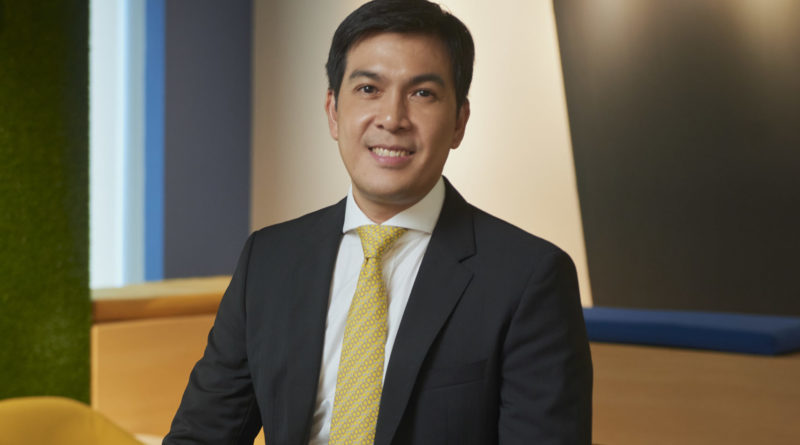
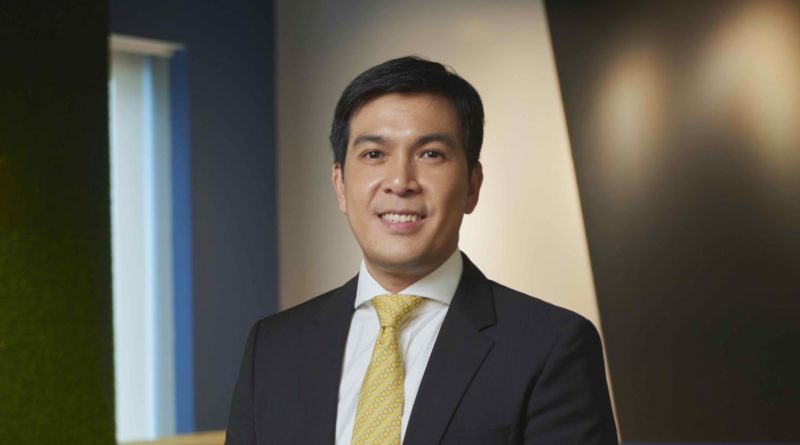
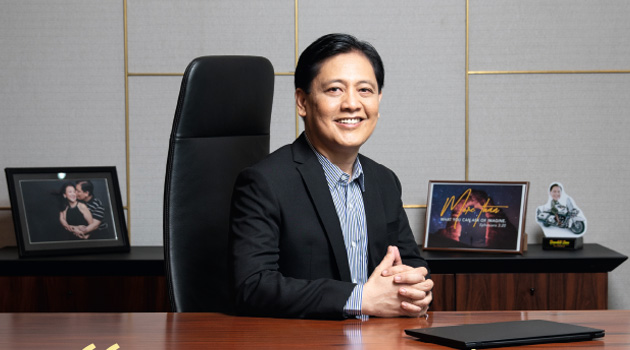
5 QUESTIONS WITH NANJO BERBA AND ROLLY ROBLES

Posted on 02 March 2010 by stormwild

EASY MONEY>5 QUESTIONS

5 QUESTIONS WITH NANJO BERBA AND ROLLY ROBLES
Senior Vice Presidents, Pioneer Life

1.  The SPARX product you launched last year was innovative in both its business model and marketing campaign. How successful has it been in terms of number of accounts, contribution to premiums, and most importantly impact on Pioneer Life’s profitability?

NANJO: We are tracking our business plans for both SPARX and SPARXx quite well. We launched SPARX (for children) bundled with the Private Iris comic book series in school tours and various events and the reception was warm and very encouraging.

Conversely, we decided to test SPARXx (for adults) as a stand-alone card targeting the employee market together with our financial wellness programs.  It has had strong acceptance in the companies that see the relevance of having financially healthy employees in relation to overall productivity.

Compared to selling insurance the traditional way and acquiring clients slowly, in such a short time several thousands have already joined the SPARXx family. As is the case for new products that are different and innovative, there have been challenges along the road but we are very optimistic that we will see the fruits of our efforts as projected in our business plans.

2. Sachet marketing is a proven model for buyer-driven consumer goods, but savings and particularly insurance, as they say, is not bought but sold, i.e. seller-driven. SPARX solves many of the hindrances like affordability, convenience, and lapsation, but how has it changed consumer behavior in terms of driving motivation to really want to save up and be insured?

NANJO: Spending and saving may be likened to oil and water. While saving seems to be in most people’s minds, the habit of doing so has remained a challenge that’s difficult to hurdle. Spending for something, especially for things we want, is often gratifying and is therefore the easier thing to do.

When we were conceptualizing our business strategies for SPARXx, we thought that people would easily go for the concept but have a harder time topping-up or saving habitually. To our pleasant surprise, the current rate of top-ups is twice as much as we projected. It seems that the act of starting a savings program is hard for people to do, but once they get into the program, they save regularly because their end goal is clear and becomes a motivating factor.

3. With the global financial crisis and economic slowdown and now that the big gorilla of the Philippine insurance industry Philam is on sale, how has the market dynamics changed and how will these affect your business?

ROLLY: People are now more vigilant in scrutinizing the credentials of the financial services company they are dealing with. They can no longer rely on the notion that a big global player is more financially sound and operationally stable than a local player. Many local players were not exposed to the investment instruments that caused the financial crisis, hence their investment portfolios remain intact.

Filipinos now realize that it is easier for them to track how a local company is doing business, unlike foreign companies who usually operate in other jurisdictions that they know nothing about. The stability of foreign companies has thus become questionable, as proven by the recent fall of some big global players. In this sense, the financial crisis has leveled the playing field between global players in our country and their local counterparts.

As the financial crisis lingers, the Philippine market will continue to be more cautious with a high tendency to wait and see. This will lengthen the decision process for many clients before they purchase a life insurance policy. Nonetheless, we are still confident that people will soon realize that while the financial crisis is a force to contend with in the short term, they cannot put their long term plans on hold because of it. The fact is that the financial packages that life insurance offers are designed to fulfill long term goals. As the market gets used the prevailing economic climate, we are confident that sales will pick up again.

4. VULs have swept the investors’ market by storm, but it seems Pioneer Life seems a bit low-key in this area. What are your plans in this category?

ROLLY: Due to the apparent difficulties in the industry, where returns for variable products depend on market performance, we have adjusted our targets for VUL products to pattern it after the expected response of the market.

5. How do you feel about the economy’s and your industry’s prospect this year?

ROLLY: The country’s economy will still grow but not as fast as it did before the financial crisis. The life insurance industry will still experience decent growth primarily because it remains relevant to the needs of the market. Sales should pick up in the second half of 2009 as people become accustomed to the situation and begin to realize the benefits of saving and investing to attain their long term goals.

Comments (0)

Tags:

Do You Need to Get Accident Insurance?

Posted on 08 November 2008 by moneysense

Very few Filipinos bother to buy insurance against bodily injury caused by an accident,
By Carlos Gonzales

Last October 2008, Dr. Francisco Sarabia was driving along EDSA when a speeding Joanna Jesh bus hit his car with such impact that it burst into flames. The doctor was trapped and charred to death.

The news came as a shock, as so many similar vehicular accidents and deaths reported practically every day. What is just as shocking is a recent announcement by the Department of Health: road accidents are now the fourth leading cause of death in the Philippines. If the trend continues, health officials fear that road accidents could become the leading cause of deaths in the country by the year 2020.

Continue Reading

Comments (7)

Liability Insurance 101

Posted on 19 August 2008 by moneysense

You or your company got sued? Don’t let your personal assets be wiped out. Here’s a quick primer on this much misunderstood type of insurance
By J. Randell Tiongson, RFP®

Big companies get sued all the time. Take the case of Sulpicio Lines with the MV Princess of the Stars disaster. Imagine the cost of paying all the claims filed against that company. Without liability insurance, can you imagine how Sulpicio can ever recover from this unfortunate mishap?

If you think you or your small business is immune from legal claims, think again. Common folks are often confused or worse, disinterested in understanding the different kinds of insurance products. One of the most widely used insurance is also one of the most misunderstood, if not unknown. Tort, although civil in nature, can become very costly for a business or an individual.

What’s liability insurance?

Just what exactly is liability insurance? Is liability insurance created for the protection of the business or created for the protection of the public? What sort of liabilities does this insurance cover? Is it compulsory or not? These are some of the basic questions we have to answer to understand the concept of liability insurance. It is unfortunate that we often disregard things, items, and persons that are utterly important to us, e.g. (in the order of most forgotten or neglected), God, prayers, spouse, and our insurance policy. We remember them only when the situation calls for it.

When we talk about liability, we talk about legal claims of third persons for bodily injuries and or property damage. The most common and familiar probably is TPL (third party liability) for car insurance. Does this sum up about everything we need to know about liability insurance? Well, I hope not. CTPL for car insurance has its own specific provisions under the insurance code.

Basically, liability insurance is designed to protect the assets (business as well as personal) of a person or entity whether big or small from claims of their customers or even the general public that may suffer injuries or damages. There must be a causal relation (proximate cause) between the injury and the business. Liability insurers are not insurers of the body or property of third persons. Otherwise, no insurance company would cover such a peril or even engage in such business.

Who is really being protected?
According to Atty. Carlo Cariño, “Liability insurance for the protection of the business is not always the case. The Supreme Court looks at liability insurance in a slightly different way. This is important to know because interpretations made by the Supreme Court become part of the law of the land. Supreme Court has held time and again that liability insurance is designed for the protection of the public. This is why payment is made to the party injured and not to the insured. Moreover, the Supreme Court held that a ‘No Action’ provision in the liability insurance policy is null and void. A ‘No Action’ clause in liability insurance provides that the insured must first be sued and a final judgment obtained before liability attaches to the insurer.”

What is and isn’t covered?

Atty. Carlo says that liability insurance covers almost all sorts of liability incurred by the person insured. However, he points out, liability must not be the product of gross negligence on the part of either party. He says, “Gross negligence means that the acts attending the injury is characterized by a wanton disregard to safety, common sense of decency, diligence, contrary to public policy and good custom and thus amounting to fraud. The insurer cannot be held liable for a fraudulent act of the insured or of third persons. The policy does not contemplate to cover such a situation. No one should profit from any act of willful disregard to safety and common decency.”

Payment of liability by the insurance company is limited to actual losses for the injuries sustained. Unfortunately, different people are entitled to different claims. This is why insurance companies put up a ceiling. Any amount above the ceiling would have to be shouldered by the insured.

If a company or a person could face bankruptcy when faced against a liability claim, why would anybody want to take this business? Again, liability will not be shouldered by the insurance company alone. The risk of paying for a liability will be distributed to a “group.” This kind of insurance is a risk distributing device. This is also known as risk-pooling. This is a method used by all insurance companies.

How much to insure?

Moreover, insurance companies are allowed to limit the perils it will insure against. The insurance company also puts a ceiling as to the amount it would pay and would put clauses which would delimit its exposure to the risk. Some pertinent underwriting guidelines will also be applied in assessing the risk. Often, heavy equipment and machinery companies are hit hard. But that, notwithstanding, any type of business should get a substantial coverage.

Liability insurance is somewhat designed for the protection of the public as has been projected. Hence, this is the reason why some businesses are not permitted to operate unless the proprietor or the corporation is sufficiently covered by liability insurance. This is true with regard to businesses engaged in the transport of persons in contrast with a company engaged in the transport of cargos. The question is how substantial is substantial coverage? Determining this amount is quite tricky.

Liability varies depending on the circumstances of the case. For example, if the injured party is a lawyer or an executive with a top position, or when the company is engaged in exposing plenty of people to perils and hazards or when the business is engaged in the manufacture of hazardous materials or chemicals, the probability of injury becomes high or in the case of the persons who are exposed, the amount of compensation in case of an injury is quite substantial.

Is this a good excuse for negligence?

Another question comes to the fore. Given that liability insurance is present and sometimes compulsory, would it not promote recklessness instead of safety? In other words, is liability insurance really for the promotion of the public’s welfare? The answer to that is quite simple.

First, liability insurance is not the final answer to liability claims. Remember, it does not answer for all kinds of liability. Also, the Supreme Court has held many cases sustaining the refusal by the insurance company to pay (existence of fraud or by reason of estoppel). Second, the insured person or entity would not be able to get coverage the next time due to what is known as moral hazard. Third, moral and exemplary damages (awarded if proven that there is gross negligence) are not covered by liability insurance. These claims could also be in an amount as much or even more than the actual damages claimed. Finally, settlement of civil liability does not extinguish criminal liability (criminal negligence may be present). Besides, the idea that anyone who would want to expose himself to unnecessary risk just because he has some form of insurance coverage is just absurd.

Indeed, liability insurance promotes safety and commerce. The intangible consolation for those with business is that it is comforting to know that you do not have to worry so much about liability and thus concentrate on the sound operation of the business. Moreover, compared to the cost of insurance than saving a hefty amount to cover liability claims, the former is cheaper. You do not have to infuse into the price of your product a substantial amount to cover liability claims in the future. Your goods become competitive. Operating expenses are simpler and relatively efficient. Some comprehensive fire insurance has (limited) liability coverage. Review your insurance policy and make sure everything is clear.

J. Randell Tiongson is a training specialist, personal finance educator, coach, and a director of the Registered Financial Planning Institute. He has been engaged in the various facets of the financial services industry for nearly two decades. He is also the co-founder of www.income-tacts.com with Efren Ll. Cruz, an interactive site dedicated in the financial literacy of every Pinoy. For inquiries, you may send an e-mail to randellt@gmail.com.

Atty. Carlo Cariño is a lawyer and a legal expert on the area of Financial Services. To get in touch with him, you may send an e-mail to carmalaw@gmail.com. J. Randell Tiongson and Carlo Cariño are part of the Personal Finance Advisors Philippines Corp. which is engaged in the conduct of public talks, training, and consultancy services.

Comments (0)

A Widow’s Story

Posted on 18 August 2008 by moneysense

A heart-breaking loss turns this mother to helping other widows like her
By Susan Dimayuga-Javier

As I share to you my story, I pray that you will learn the value of marriage and protecting your family through a W.I.S.E. decision. W-ork, I-nvest, S-ave, E-njoy.

I started saving when I was only 16. I used to sell sandwiches to my classmates and schoolmates and learn to save and deposit my profit to the bank. After graduating in college, I worked as a consultant to a manufacturing company of skin care and fragrance products. I learned to upgrade my savings through pension and educational plans. I decided to have these when I was 20 even without family yet knowing that I will have one someday in God’s perfect time.

I met my husband Arthur year 1997. We’ve known and discovered each others’ strengths and weaknesses for less than three years then decided to get married year 2000 of January 12.We are blessed to have a very loving and sweet daughter Sabrina.

With Arthur’s motivation and encouragement I continued to save and invest to protect our income as well as my family. My brother Bernard was my insurance agent. I had my first plan with Prulife year 1998. He also offered and explained to my husband the benefits of having a protection and coverage. Yes, he agreed but did not make a decision to have one.

We were both working and providing income for our family. Praise God for providing all our needs without any loans and mortgages. I can say that we have a simple and yet enjoyable life. We can travel once a year and enjoy to have bonding with our daughter.

Last June of 2002, my husband called and told me to proceed at the ER of Makati Medical Center. He was so drowsy and numbed that time. I ran to the hospital, good thing my office was only at the back of MMC. He was still conscious and I can still talk to him. Until the doctor evaluated him and ordered to have a CT scan. He had haemorrhage on left part of his brain. This is what they call stroke. He was confined for two weeks and was able to recover for two months with determination to live for our two-year old daughter. He learned to have a healthy lifestyle. He had a regular exercise and proper balance diet to reach his ideal weight.

He enjoyed playing badminton and even joined tournaments and when you see him play as if he had not suffered from stroke. After three years of continuous effort to live longer. Nobody expected that his way of prolonging his life which is playing badminton will stop his heartbeat

June 18, 2005, I got a phone call from my brother-in-law and told me that Arthur collapsed. My daughter and I were watching a show at RCBC auditorium in Makati which just started around 6:30pm. We ran to the hospital just a five-minute drive away. We saw him unconscious and doctors were trying to revive his heart beat until 7:00pm he was pronounced dead. Relatives were coming and crying. I was in the state of showing my daughter that I have to be strong for her.

I thanked God for giving me enough strength and courage to accept what happened to my husband. I always think that nothing is permanent in this world and we don’t own anything. Everything belongs to the Lord. That time was Arthur’s time to go. As the Bible says: “For our perishable earthly bodies must be transformed into heavenly bodies that will never die (1 Corinthians 15:53).”

We planned to have a wonderful life but our Lord has the best plan for each one of us. My husband passed away without life coverage but taught me to be more passionate in sharing my own story for other people to learn that we don’t know when will be our last day on earth. I always tell my clients especially to both parents to get insurance (Susan can be reached through 0919-357-0825 or 890-3205 – Ed). As we start the day and do our tasks to glorify God, preparing ourselves spiritually, emotionally, and financially is very crucial.

Let me enlighten you that life is so beautiful. Here are some lessons I would like to share:

1. There are times we encounter trials and challenges but we should consider it pure joy because that is the testing of our faith which develop perseverance.
2. Enjoy your marriage. “You should be faithful to your wife, just as you take water from your own well….Be happy with the wife you married when you were young (Proverbs 5:15-18).”
3. Be strong. “He gives strength to the weary and increases the power of the weak. Even youths grow tired and weary, and young men stumble and fall; but those who hope in the Lord will renew their strength.
4. Encourage your partner to save, invest, and protect your family.

Comments (3)

Protect Yourself from Your Insurance Policy

Posted on 18 August 2008 by moneysense

By Ma. Esther Salcedo-Posadas

Many Filipinos have been burned by one too many pre-need, and even insurance, companies. Since both industries thrive on trust and integrity, it is quite hard for many to reconcile both promise and reality. In fact, even the world’s largest insurance company has not been exempt from financial mishaps that have recently tainted its golden image. Nowadays, it is not enough to make a decision based on a brand name. It’s imperative to take control of your financial life. Ironically, you have to protect yourself from unscrupulous or unstable insurers and pre-need providers. So before you place your hard-earned money in an insurance policy or pre-need plan, keep these things in mind:

Do the numbers yourself. In the past, many plan and policy holders simply accepted whatever the actuarial report presented. They considered the insurance plan as “forced savings” and thus did not think much whether the return or insurance coverage was actually worth the money put in. Ask your financial planner what the annual rate of return is and compare it with market values, plus make your own projections. Some investors prefer to invest their own money for the simple reason that they think they can earn more doing it themselves – but that also requires discipline in managing and saving the funds for a gloomy day.

On the other hand, an average investor may feel safer entrusting his money to an expert. This is where the critical question lies because it is not always easy to spot the best person (or company) for the job. In this case, getting good financial advice as well as diligence in doing your own research and calculations is crucial. You are going to spend many years paying for the insurance coverage so it better be worth your hard earned sweat and tears. If you are not adept with numbers, get some financial education before you entrust your money to someone else.

Emmanuel Atienza, a father and primary breadwinner of his wife and two kids has invested in life, health, and memorial plans but not in an educational plan. He feels that the return on investment from the new educational schemes is not acceptable and that he could do better elsewhere. However, he feels the necessity in making sure that life’s emergencies are taken care of because he doesn’t want his family burdened if something happens to him. “If I die, my life insurance will help cover my family’s immediate needs.”

Read the fine print. Even before signing the insurance or pre-need contract, make sure that you read and understand everything including the fine print.  If there is one point that you do not comprehend, don’t be ashamed to ask your financial planner about it. Also find out what your alternatives are in case you may want to cash out early or perhaps decide to end the contract prematurely.

Develop an exit strategy. Not all perfectly laid out plans happen without hitch. Therefore, it is important to think of different scenarios, in case you may need the money at a time that you least expect.

Invest in products that make sense to you. If you don’t understand it, don’t do it. Simple as that may sound, many new investors are lured into complicated hybrid products that they themselves cannot explain. For example, if you discover that an insurance product (that is guaranteed) is offered back-to-back with a mutual fund option (that is not guaranteed), will you take it and why? It’s important to ask yourself simple questions before proceeding further.

Get used to uncertainty. Learn to play the game of uncertainty because the past and the future are worlds apart. For many people, that realization means learning how to be entrepreneurial in many aspects of life. Such a paradigm shift will affect the way you view insurance, in general. After all, we pay big sums of money because we want the assurance of predictability. You have to ask yourself whether that idea holds true to this day. However, bear in mind that there are insurance and pre-need companies with untarnished track records and who have actually lived up to their names. The responsibility of finding that proverbial needle in the haystack rests in you.

Comments (2)

Advertise Here
Advertise Here