Archive | Economy

Learning From the Global Financial and Economic Crisis

Posted on 28 February 2010 by stormwild

HERE’S A FINAL TIP

Learning From the Global Financial and Economic Crisis

By Gov. Amando M. Tetangco, Jr.

When I’m asked what keeps me up at night, I say “on the contrary, I sleep soundly.”* Though I have to admit that during the critical weekend just before the European central banks came out with their concerted program, Bloomberg, CNBC, and CNN kept me awake. At that time, it was quite unreal that when you would retire, the equities were up, but when you wake up, they would be down.

Seriously, I sleep well knowing that the Philippine economy is in a better position to withstand any financial storms that come its way and that our policy framework at the Bangko Sentral ng Pilipinas (BSP), though not recession proof, contains the appropriate balance between the requisite discipline toward the price stability mandate and flexibility to respond to challenges.

On that note, I share with you three key lessons we all should take away from the current crisis:

Macroeconomic prudence. This entails building buffers during good times to provide resilience in bad times. The pursuit in the past of credible monetary and exchange rate policies, responsible fiscal management, and strengthened financial supervision and regulation has afforded the Philippines some cushion from the turmoil going on in the global economy.

Quick and decisive response. The difference between the current crisis and past financial crises was the urgency and swiftness with which governments and central banks responded with an extensive array of support measures to stabilize the financial system – liquidity provision, capital infusion, and enhancing deposit insurance. These have had some effect in terms of shoring up confidence.

Effective and timely communication and transparency. These are important to help shore up market confidence. This is manifested most profoundly in terms of better disclosure of bank exposures to troubled financial institutions, banks’ institutional arrangements for risk management, and information on the range of underlying assets of structured financial products. Timely communication to the public on recent developments, policy changes, and emerging risks to the outlook and their implications for the economy would also help reinforce credibility.

And my advice to financial players to cope with these challenging times:

Remember the basics. Understand your market and keep to standards. It is worth noting that the root cause of the crisis is the weakening of safeguards in carrying out a very basic lending institution responsibility – underwriting. Even with an expansionary monetary environment, the crisis could have been mitigated had lending institutions observed prudent underwriting standards and regulators undertaken appropriate or corrective oversight.

Make sense of every financial innovation in the market. What one does not understand, one should not dabble in. This may seem pretty rational but under benign market conditions, exuberance strips the market of any rationality.

Protect themselves from market downturns. Have sufficient capital in line with risk exposure, business strategy, and possible changes in the economic and market environment.

*This was excerpted from The Last Word from GlobalSource Philippines monthly report of GlobalSource, New York and Lazaro Bernardo Tiu & Associates, Inc., Philippines.

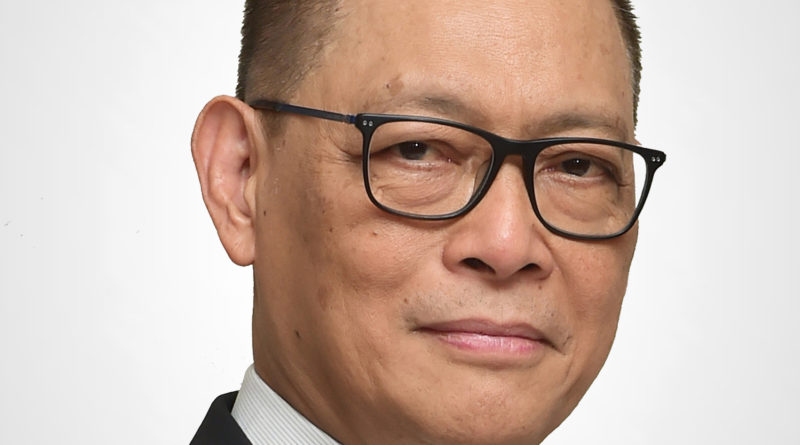
A central banker for 35 years, Amando M. Tetangco, Jr. has worked through the 1980s debt crisis, the 1990s central bank restructuring, and the Asian crisis. Now in his fourth year as BSP governor, he’s at the helm working through the global financial and economic crisis.

Comments (0)

5 Questions With David Lee

Posted on 04 February 2010 by stormwild

5 Questions With David Lee

Visa President, Asia Pacific

Over the course of 50 years, Visa has evolved from our credit card roots to become one of the world’s leading global payments networks. Its vision is to “create better money in order to make cash and checks obsolete. Better money means more secure, convenient, and rewarding electronic payments and payment-related services.”

Today, Visa connects consumers, businesses, governments, merchants, and financial institutions in more than 170 countries. Visa’s network includes 1.6 billion cards, 29 million merchant outlets, more than 1.4 million ATMs and 16,500 financial institutions[1].

MoneySense asked newly appointed Visa President for Asia Pacific David Lee five questions about the economy, payment trends, and Visa’s plans for this year:

1. Given the global economic slowdown, how bad do you see the impact on consumer spending in Asia Pacific, including the Philippines, as well as Visa’s business worldwide?

Our business is built on driving more volume through our network by increasing the use and acceptance of our products and services, and Visa has more branded cards in circulation, more transactions, and greater total volume than all of our competitors combined.

Of course, we are not immune to the state of the global economy. As Visa’s CEO Joe Saunders mentioned in our fourth quarter earnings call, the markets are in turmoil and we have been impacted, like many other companies out there, over the past several months.

2. How is Visa responding to this?

We are continuing to do what we can to advance Visa’s overall business in these trying times. And, we continue to focus on key strategic initiatives, such as debit and prepaid, as well as growing non-discretionary spending tied to the secular shift towards electronic payments.

Part of this secular shift is an increasing proportion of non-discretionary spending on Visa cards. Everyday spending – such as gasoline, utility bills, groceries, drugstore spending, – has, in the past, been less susceptible to economic fluctuations and continues to grow.

This is why we have been continuing our focus on Visa debit card products in the Philippines.

3. There seems to be an increased push from banks to use debit cards for both payments and remittances. How is this area doing for Visa?

Visa believes that there is a global secular shift away from cash and checks to electronic forms of payment. Part of this shift is in debit transactions, which represent more than half of Visa’s global total volume. Our comprehensive range of payment products extends payment security, convenience, and access to consumers, businesses, and governments worldwide, allowing them to pay however, whenever, and wherever they want.

Total volume on Visa credit and debit products was US$4.2 trillion in the four quarters ended June 30, 2008. For Asia Pacific, the number of Visa debit and credit cards was 472 million in the four quarters ended 30 June 2008, an increase of 14.6% compared with the four quarters ended 30 June 2007.

4. What would you say is on the top of your agenda for 2009 as the newly appointed president of Visa Inc. AP business unit?

As a network business, our key to growth is driving the use of our products and services among cardholders, merchants, financial institutions, businesses, and governments.

To achieve growth, we will focus on expanding in two areas: Visa’s core payments business and the processing business.

We want to build upon Visa’s strength in established geographies around the world, focusing on high-opportunity segments where Visa products and services are currently under-penetrated. That includes investing in high-potential geographies in the early stages of migrating to electronic payments such as China and India. For example, Visa has invested significantly in India to develop more efficient payment systems. With a growing middle class numbering in the hundreds of millions, India presents a unique environment and opportunity for electronic payments.

In addition, we plan to grow Visa’s network-processing business by facilitating a greater number of transactions through VisaNet, thereby adding value for all our stakeholders. Visa has recently set up a joint venture with Yalamanchili Software Exports (P) Limited, a leading payments processor and software products and solutions company, to extend our processing capabilities in some of the fastest-growing payments regions in the world. Initially, the joint venture will focus on providing financial institutions, processors and other payment companies with prepaid and debit processing solutions. We will also extend Visa’s value-added processing services, which we believe can increase network utility and value for our key stakeholders – cardholders and merchants.

5. What numbers are you looking at in terms of first quarter defaults compared with the first three months of 2008 and 2007?

We can’t discuss any financial impacts specifically. We remain confident in our ability to compete successfully for client businesses. We are not resting on the positive history of our relationships or taking them for granted. We believe Visa’s brand, product breadth, geographic diversity, and processing capabilities are strong differentiators. We remain focused on serving our clients and adding value to our relationships wherever we can.

Part of this secular shift is an increasing proportion of non-discretionary spending on Visa cards. Everyday spending – such as gasoline, utility bills, groceries, drugstore spending, – has, in the past, been less susceptible to economic fluctuations and continues to grow. This is why we have been continuing our focus on Visa debit card products in the Philippines.

[PROFILE]

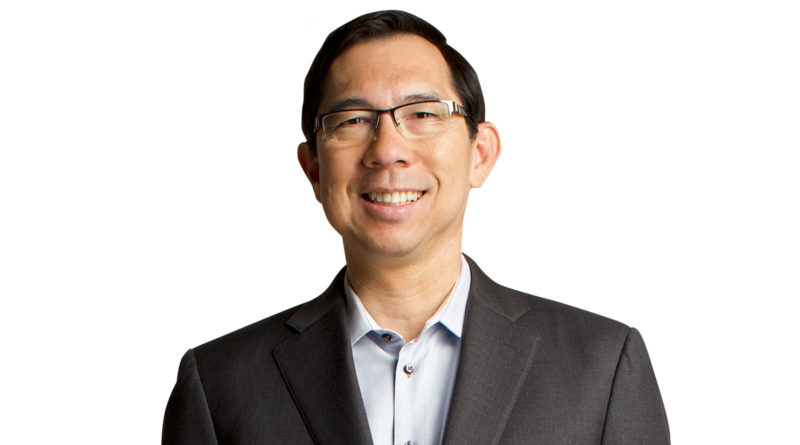
David Lee is president for Visa Asia Pacific, responsible for continuing to grow Visa Inc.’s business in the region. He joined Visa in 1985 from international accounting firm Peat Marwick Mitchell & Co. He has held a number of roles in the Singapore regional headquarters culminating in his appointment as chief operating officer in 2007. Born in Malaysia, David was educated in Singapore where he was awarded the Lee Foundation Prize by Singapore’s Chartered Association of Certified Accountants as the year’s top graduate on gaining his ACCA. In 2003, he graduated from the Harvard Business School’s Advanced Management Program. David currently serves as a director of the National Library Trust Board, the Singapore Management University School of Accountancy Advisory Board, and the Naval Base School Advisory Board – his alma mater. Most recently he was appointed to the board of Visa Processing Service Pte. Ltd. (VPS), a joint venture between Visa Inc. and Yalamanchili Software Exports (P) Limited, a leading payments processor and software products and solutions company with operations in India and Singapore. He is married with three children.


[1] For the four quarters ended June 30, 2008; merchant outlets and ATMs as reported by our client financial institutions and therefore may be subject to change; includes merchant outlets and ATMs in the Visa Europe territory.

Comments (0)

new-image2

Despite the crisis, TNT Express to continue investing in SEA, Philippines

Posted on 13 August 2009 by lynda

new-image2

TNT Philippines officials Chris Spanjaard (left) and Celtin Yalcin open the ceremonial crate, launching the TNT Express Pampanga depot.

SAN FERNANDO, PAMPANGA – They did not escape the brunt of the global financial and economic crisis, but for Netherlands-based TNT Express Worldwide, they will continue to invest in the Southeast Asian (SEA) region, as part of their 100 million, 5-year-plan launched last year – and the Philippines is benefitting from that investment.

Last Wednesday, August 12, TNT Express opened its P15 million San Fernando, Pampanga depot, a strategic location as it is near Subic, Clark, Angeles in Pampanga and Bataan province. This investment of one of the world’s leading express integrators serves as proof to the potential of the region and the Philippines.

“We believe this (Pampanga) is a very promising area for business,” Celtin Yalcin, TNT Philippines country general manager, says.

We’re affected by the downturn. We recognize the volatility of the market. It’s difficult to predict what would happen in the coming years. (That’s why) we’re also careful to bank on the future,” says Chris Spanjaard, operations director.

“But we continue to grow with new customers and new businesses. We continuously look for key locations and where our customers require us to be present. And the Philippines is one of the key areas where we’re investing,” Spanjaard adds.

“We’re not planning to decrease our investment. We don’t have any specific location yet after Pampanga depot. Whenever we see more opportunities, then we would strengthen our presence here (in the Philippines),” Yalcin says.

Yalcin adds that TNT Philippines is poised to hit a double-digit growth in volume handled this year, as it seeks new clients, including Texas Instruments (which invested $1 billion in Clark Freeport). The company, which Philippine presence dates back from 1982, aims to take advantage of the growth of the economic zones in Subic and Clark, even as other freight providers like Federal Express and UPS moved their regional hubs out of the country.

The TNT Philippines Pampanga depot is capable of handling 400 tons of shipments daily. It occupies 800-square-meter operational area for handling, check-in, Larose label printing, data entry, scanning, bagging, consolidation, and deconsolidation activities. It also includes a multi-pallet-position selective racking facility ideal for various storage requirements. CCTV cameras are also installed to ensure a 24/7 security. – LYNDA C. CORPUZ

Comments (0)

Advertise Here
Advertise Here