Archive | Deposits

Tags:

5 Checking Account Boo-Boos

Posted on 18 August 2008 by moneysense

By Carlos Gonzales

Using a checking account is a convenient way of paying bills like credit cards and tuition. Just write a check and there you go. But if you’re not careful, you may be needlessly making your bank richer (and yourself poorer). So what are the five common mistakes you can make with a checking account? And what can you do to avoid them?

Boo-boo #1: Bouncing checks

Why it’s wrong: This is a very costly mistake, as you will be charged not just a fixed fee but also an additional fee per day. If you fund a temporary overdraft, i.e. it’s honored, one major commercial bank charges P1,000 plus P200 per P40,000 per day. If your check is returned, the fee is P2,000 plus P200 per P40,000 per day. If you keep on forgetting to fund your account sufficiently, this will really hurt. And if you let your checks bounce, you’re going to get yourself in trouble.

What to do: Stay on top of your account balance. Many banks provide tools that will help you be updated anytime. You can check your balance online or even via SMS. Or simply call your branch or the call center. If you need to issue a check quickly and you don’t have time to check your balance, see if you can post-date it a few days to give you time to fund your account.

Boo-boo #2: Using an ATM

Why it’s wrong: While it may be convenient having a checking account with an ATM card (you can issue checks and withdraw cash from an ATM), this can also cause a lot of headaches. For one, it’s a lot harder to monitor your transactions. If you have the habit of making withdrawals from other banks, say twice a week, at P10 per withdrawal and a peso per inquiry, you would have unknowingly spent P88 in a month, or P1,056 in a year.

What to do:
If you really want an ATM to go with your checking account, plan your withdrawals ahead so you only withdraw from your bank’s ATMs. Better yet, just hide the card in your drawer and just use it for real emergencies. If you have a regular savings account with an ATM, e.g. a payroll account, use that as your main ATM account. And open a checking account with a good old fashioned passbook, not with an ATM and a monthly statement.

Boo-boo #3: Not balancing your check book

Why it’s wrong: The old-school way of balancing a check book is manually writing on the register the amount whenever you issue a check, make a deposit, earn interest, or are charged fees or withholding tax, and making a running balance. That should sound fun for a CPA but not for you. If you’re not as diligent and patient in recording transactions, you will make mistakes.

What to do: A better alternative is to sign up for online banking and check your balance – automatically updated – almost in real-time (there are cut-off times for system updates).

Boo-boo #4: Overfunding your account

Why it’s wrong: If you don’t have enough money in your account, you’re in danger of overdraft. If you let your balance get depleted below the minimum average daily balance, you can be charged a service fee of P200 to P500 per month. The other extreme is overfunding your account. Most regular checking accounts don’t pay interest and those that do pay just a fraction of a percent that it doesn’t make any sense to keep more than you need. You’d think it doesn’t cost you anything but it does – in opportunity cost. Instead of sleeping in your checking account, your money could be earning more – a lot more – in a time deposit or mutual fund.

What to do:
Don’t park your excess funds in your checking account. Proper planning of monthly expenses that you’ll use checks for should allow you to keep just enough money in your account. Remember that your checking account should be purely a transactional account to be used for paying expenses.

Boo-boo #5: Getting careless

Why it’s wrong: Checks are also a favorite tool of scammers. Some common ways your checking account can be misused are signature forgery, tampering of an issued check, and outright counterfeiting. Your account can be wiped out and even be charged for overdrawn checks (by the thief).

What to do: It would be nice if you have a signature that’s not easy to forge for starters. Otherwise, just make it a point to be extra careful: don’t pay to cash, keep your check book in a secure place, don’t leave blank checks lying around, fill out all lines, and monitor your account online for suspicious transactions. If you discover your check or check book has been stolen, call your bank immediately and request a stop payment.

Comments (1)

Tags: , ,

The basics: bank deposits

Posted on 29 November 2006 by moneysense

By Carlos Gonzales

Sure you know everything about deposits. Or do you? Here’s a short primer to get you up to speed.

What they are
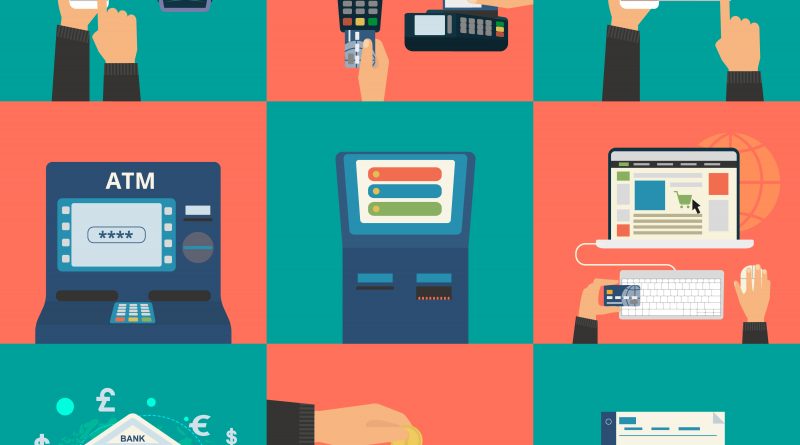
They are bank products that allow you to place your money for safekeeping, pay for goods and services, and earn interest. The common types of products are:
•    Savings Account: This is where you place your money (or if you’re employed, usually where your payroll is deposited) for temporary use. It’s very liquid but it also usually pays low interest. You get a passbook or a statement of account, plus an ATM card.
•    Special Savings Account: Also referred to as premium savings account. There is a tiered structure such that you get higher interest the higher your balance. But there are withdrawal restrictions.
•    Current Account: Better known as a checking account. You get a checkbook which you used to write checks to pay for transactions. Usually you don’t earn interest.
•    Negotiable Order of Withdrawal (NOW): A checking account that earns interest, but there are restrictions to the number of checks you issue per month.
•    Time Deposit: You get a certificate as proof of ownership. It’s like a savings account except you can only withdraw the money when it matures, usually from 30 days to up to five years.
•    Certificate of Deposit (CD): It’s like a time deposit, but negotiable, meaning you can sell it in the open market.

What you earn
You earn a fixed interest on bank products, except for some checking accounts.

What they cost
•    Usually, there’s a minimum maintaining balance (called average daily balance or ADB), except for some savings accounts, below which the bank charges a fee.
•    You also pay if there’s no movement in the savings or checking account for a long time (which is labeled dormant).
•    You pay if you close the account within one month of opening it.
•    If you use the ATM, you’ll get slapped with fees for using another bank’s machine or another ATM network.
•    If you have an ATM card, but you withdraw over the counter even if the network is not down or you withdraw less than the daily maximum limit, you pay a fee.
•    And if you issue a check and there’s not enough money in your account, you’ll be charged for insufficient funds, whether or not you were able to subsequently fund it.
•    If you issue a check, then issue a stop payment order (SPO), you pay.
•    If the account has restrictions on the number of withdrawals you can make, and you exceed them, there’s a surcharge.
•    You also pay for new checkbooks and getting a print out of your statement of account.
•    Banks have devised a lot of other fees and charges other than those listed here. So check with your bank.
•    There’s a 20% withholding tax on the interest you earn, except for deposit products that have a maturity of more than five years.

What’s good
•    They’re insured by the government through the Philippine Deposit Insurance Corporation up to P250,000 per person.
•    They’re typically liquid, particularly for savings and current accounts, so if you need access to your money, this is one of the quickest ways to get it.
•    They’re useful for everyday transactions like paying for goods or for bills, without having to carry a wad of paper bills in your wallet. That’s why they’re referred to as settlement accounts. You can use a check, your ATM card (which in some banks double up as debit cards, plus you can do transactions on the machine itself), or through Internet, phone, or mobile banking.

What’s bad
•    They don’t pay well, except for some long-term special savings products and CDs (which, on the other hand, are not as liquid anymore since you have to hold them till maturity). So you can’t beat inflation. In the case of checking accounts, they don’t pay anything at all.
•    The fees and surcharges can really hurt. If you don’t balance your checkbook regularly or if you strike ATMs randomly, you’re apt to ramp up charges.

N is for negotiable, D is for deposit
That’s quite a mouthful. If you’re wondering what a long-term negotiable certificates of deposit (LTNCD) offered by a few banks is all about, breaking it down per term will help (sing along with me):
•    LT is for Long-term: In this case, we’re talking about five years and one day, making the interest income exempt from withholding tax, if it’s kept that long.
•    N is for Negotiable: That means you can sell them before the maturity date at the current market price.
•    Certificate of Deposit: Better known as a CD. It’s a bank deposit product. So it’s insured by the PDIC (up to P250,000) and it earns interest, much higher than a regular bank deposit. It is also a debt instrument offered by a bank. But CDs, as we commonly think of, are short-term and non-negotiable. This is a new animal.
So an LTNCD is like a deposit in that a bank issues it and it is covered by the PDIC. Yet, it’s also like a bond because it’s negotiable and long-term and pays interest every quarter. In other words, it’s a hybrid product. See, that wasn’t so hard.

Comments (1)

Advertise Here
Advertise Here